

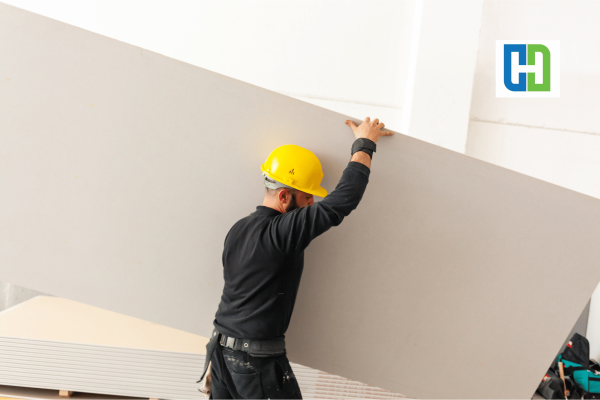
Safe manual handling in hygienic installs
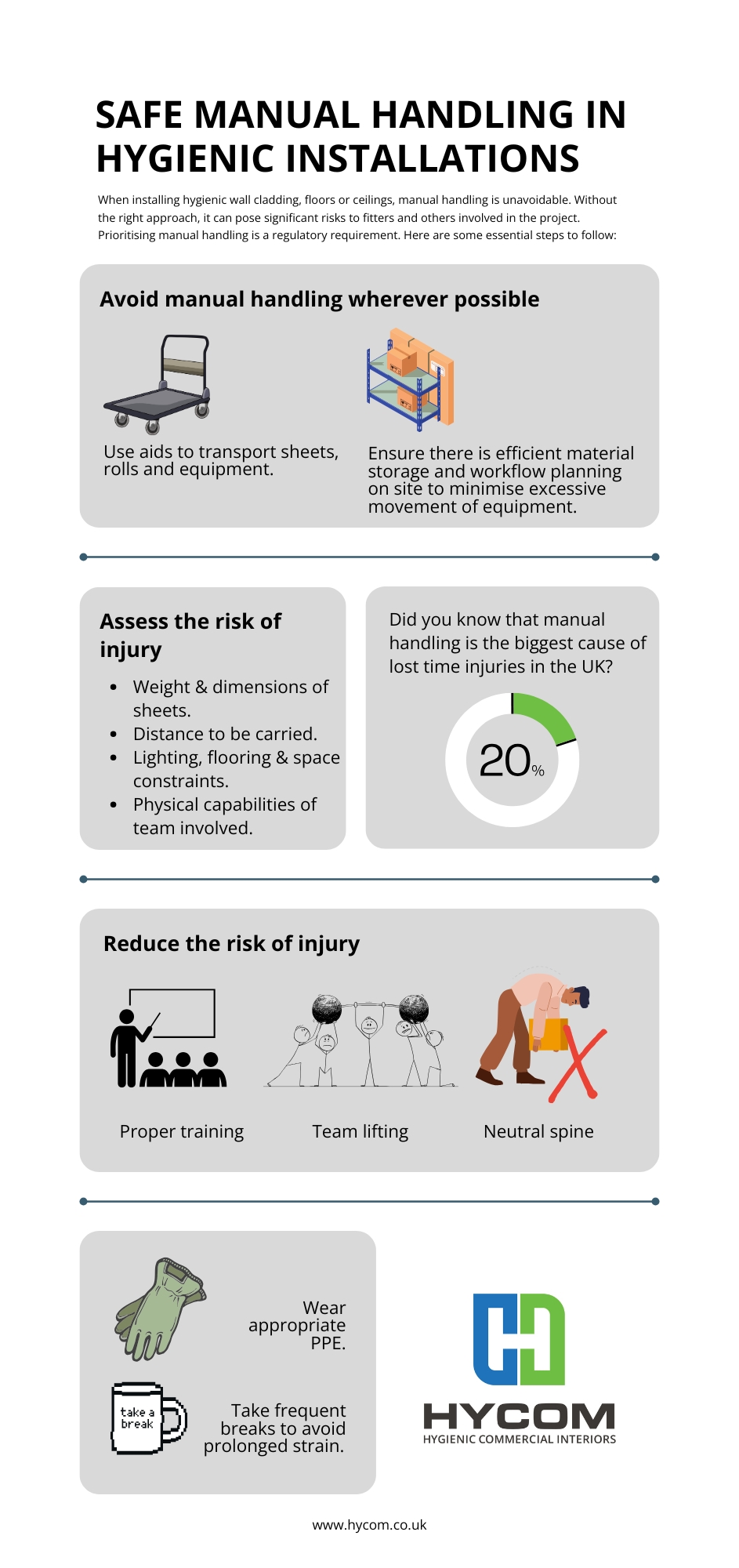
There’s no doubt about it: when installing hygienic wall cladding, floors or ceilings, manual handling is an unavoidable part of the job. In fact, did you know that manual handling is the biggest cause of lost time injuries in the UK? Without the right approach, it can pose significant risks to fitters and others involved in the project. Injuries related to lifting, carrying, or positioning panels and equipment can lead to long-term health issues, delays in project completion, and increased costs. To create a safe working environment, everyone involved, one way or another, in the project is responsible for taking proactive measures to mitigate these risks.
Prioritising manual handling is a regulatory requirement. If you’re commissioning Hycom to carry out a hygienic install for you, we, as suppliers, and our fitters, will have the appropriate measures in place required by law. We can also advise on what you need to do to make the site suitable for us to deliver the project safely. If you are carrying out a project yourself, you also need to prioritise your own well being.
Here are three essential steps to follow.
1. Avoid manual handling wherever possible
The simplest way to prevent manual handling injuries is to eliminate the need for them in the first place. Now, this is obviously tricky in hygienic installations, but you can consider alternative methods that reduce or eliminate the need for lifting and carrying (sometimes heavy and awkward) materials. This could include:
- Using trolleys to transport the sheets and associated equipment.
- Making sure there is efficient material storage and workflow planning on site to minimise excessive movement of equipment. This is a big one. Sites with tricky access - whether due to location, internal layout, or other restrictions - should be reviewed in advance via a site survey. Narrow corridors, one-way streets, availability of parking, staircases, and lifts can all pose logistical challenges. A survey will assess the best routes possible for delivery and installation to ensure the materials can be transported safely and efficiently. Additionally, if you are using Hycom’s team for your project, our fitters require a minimum working space of 4x3 meters in order to set up their benches. This needs to be either within the same room, or another area very close by, so as to reduce the amount of distance our installers need to carry the sheets, especially when they are covered in adhesive, making them even tricker to carry. This will ensure the most efficient installation.
2. Assess the risk of injury
Before starting any manual handling tasks, assess the site to identify potential hazards. We’ve listed some factors to consider below. If required by your workplace, Hycom can provide an official, thorough risk assessment prior to the completion of works:
- The weight and dimensions of the sheets and equipment.
- The distance they need to be carried and any obstacles along the route.
- The posture and movements required to complete the task.
- Environmental conditions such as lighting, flooring, and space constraints. Is there sufficient space to transport the panels and equipment through the site to their destination? Again, a site survey will help determine this and prepare the right conditions required for the job.
- The physical capabilities of the workers assigned to the task. All Hycom fitters are experienced and capable of performing their jobs to the best of their abilities. If you’re involving people external to Hycom, can you say the same?
By understanding these risks, we as suppliers, our installers and customers can develop appropriate control measures to prevent injuries.
3. Reduce the risk of injury
As we mentioned before, manual handling is going to be unavoidable in hygienic installations, and, therefore, steps should be taken to reduce the risks associated as much as possible. Best practices include:
- Proper training: Ensure workers receive training on safe lifting techniques, body positioning, and load-sharing strategies. Have a search online - you’ll find many training courses available.
- Team lifting: For heavier and awkward equipment, such as rolls of vinyl flooring which are extremely heavy, it’s beneficial to use two people to lift to distribute weight evenly and minimise strain on individuals.
- Ergonomic considerations: Always keep a neutral spine posture, bend at the knees instead of the waist, and keep loads close to the body.
- Personal Protective Equipment (PPE): Wear gloves with good grip, like our Wonder Grip Fitting Gloves https://www.hycom.co.uk/wp-555-ft-gloves.html, and appropriate footwear to improve safety and stability.
- Frequent breaks: Avoid prolonged strain by taking regular breaks.
Final thoughts
Hygienic linings and vinyl flooring installations can be physically demanding, but with a strategic approach to manual handling, the risks of injury can be significantly reduced. By eliminating unnecessary lifting, assessing risks, and implementing best practices for safe handling, you can enhance worker safety, maintain productivity, and ensure delivery of a smooth project. Prioritising manual handling safety isn’t just a regulatory requirement — it’s an investment in the well-being of your team and the success of your hygienic build.