
Guide to choosing the right hygienic materials
A guide to choosing the right hygienic materials
Maintaining high standards of hygiene in commercial and industrial spaces is crucial for ensuring safety, compliance, and long-term durability. Whether you’re outfitting a hospital, food production facility, or commercial kitchen, choosing the right hygienic materials is essential. This guide will give you an overview of how to select the best materials for your specific needs, considering factors such as durability, ease of maintenance, and industry compliance.
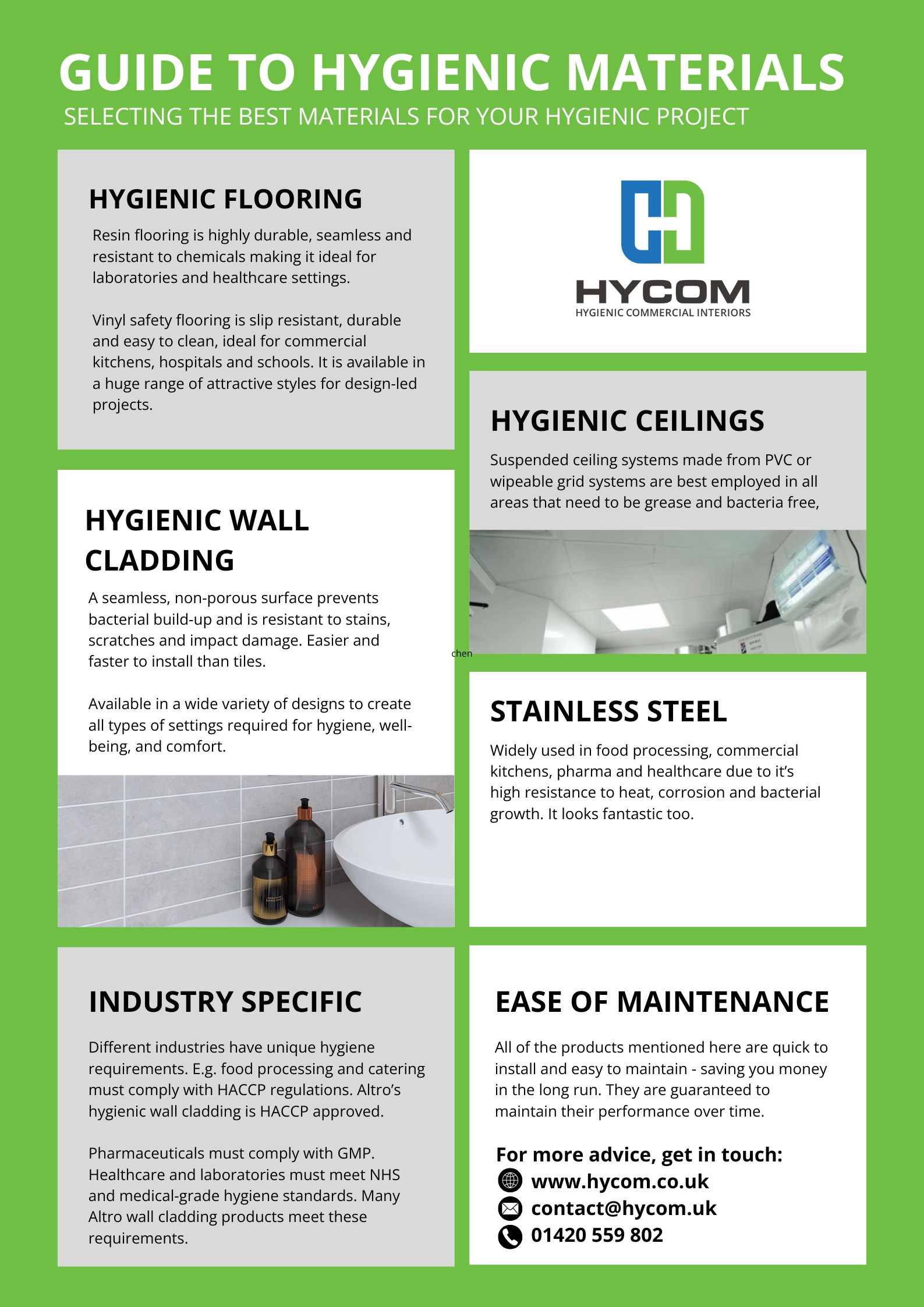
1. Hygienic Wall Cladding: A superior alternative to tiles
Wall surfaces in hygienic environments must be easy to clean, resistant to moisture, and durable. PVC wall cladding is an excellent choice over traditional tiles because it offers a seamless, non-porous surface that prevents bacterial buildup and is resistant to stains, scratches, and impact damage. And gone are the days when functionality meant sacrificing style. Hygienic wall cladding offers a sleek, modern look with a variety of colours, textures, and finishes to match your design needs. Take Altro Whiterock Satins range, versatility and sophistication available in a range of solid, decorative, satin shades – from soothing and healing through to bright and energetic. Or Altro’s Tegulis - a tile effect wall panel available in a range of patterns or colours.
Key benefits:
- Smooth, seamless finish to prevent dirt accumulation
- Resistant to chemicals, water, and bacteria
- Easier and faster installation compared to tiles
- Low maintenance and long-lasting durability
- Aesthetic appeal
2. Hygienic Flooring: Safety and durability
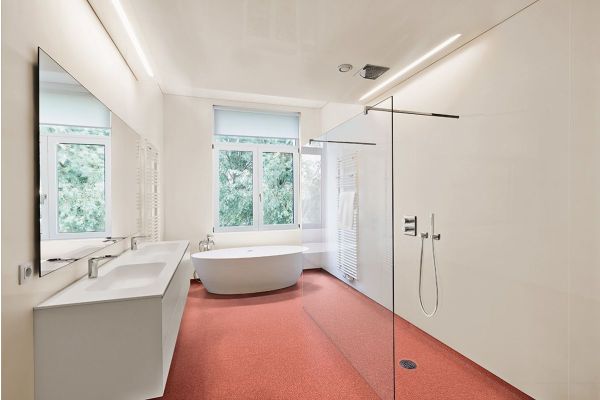
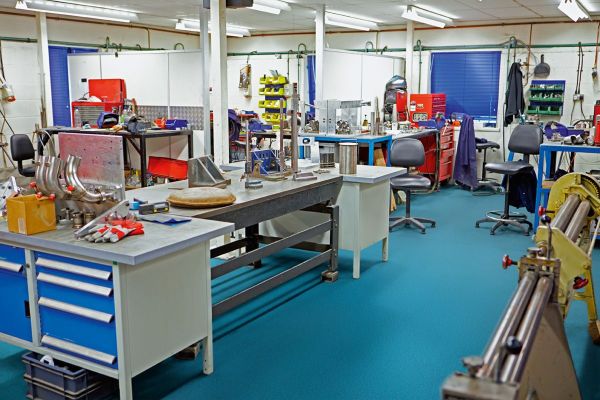
Selecting the right flooring is crucial to maintaining a sanitary and safe environment. Resin flooring and vinyl safety flooring are popular choices due to their non-slip, waterproof, and chemical-resistant properties.
Best options:
Resin flooring: Highly durable, seamless, and resistant to chemicals, making it ideal for laboratories and healthcare settings.
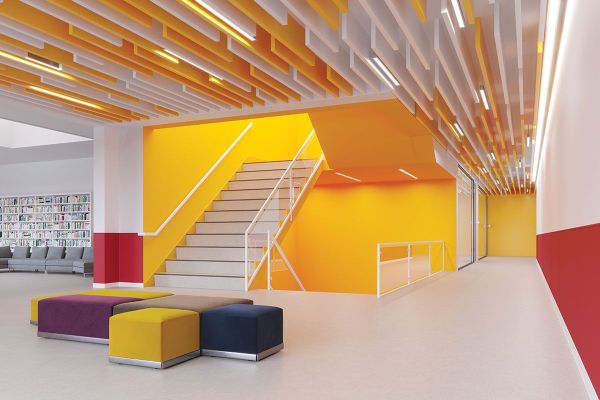
Vinyl safety flooring: Slip-resistant, durable, easy to clean, and widely used in commercial kitchens, hospitals, and schools. It can also be aesthetically pleasing, available in a variety of colours, patterns and finishes, allowing you to create an attractive space whilst ensuring safety. For example, check out Altro Wood - offering a range of designs with different plank sizes and shades including wide plank, classic and rustic designs, aimed at helping you create the right look for whatever your area.
3. Hygienic Ceilings: Preventing contamination from above
Ceiling materials should be resistant to moisture, mould, and bacteria, particularly in food preparation and medical environments. Suspended hygienic ceiling systems made from PVC or wipeable tiles are the best solutions.
Features to look for:
- Easy-to-clean, non-porous surfaces
- Moisture and mould resistance
- Fire-rated and durable construction
4. Stainless steel: The gold standard for hygiene
Stainless steel is widely used in food processing, pharmaceutical, and healthcare industries due to its high resistance to heat, corrosion, and bacterial growth. It’s commonly used for worktops, sinks, splashbacks and storage units.
Why choose stainless steel?
- Non-porous and easy to clean
- Heat and fire resistant
- Long lifespan with minimal maintenance
- Corrosion and moisture resistant
- Aesthetical appealing
5. Consider industry-specific requirements
Different industries have unique hygiene requirements. Ensure that the materials you select comply with relevant health and safety regulations:
- Healthcare & Laboratories: Must meet NHS and medical-grade hygiene standards.
- Food Processing & Catering: Compliance with HACCP (Hazard Analysis and Critical Control Points) regulations is essential. Industry leader Altro’s hygienic wall cladding is HACCP approved and provides the hygiene and protection needed to meet today’s stringent industry standards.
- Pharmaceutical: Must meet GMP (Good Manufacturing Practice) guidelines for cleanliness and contamination control.
6. Ease of installation and maintenance
Choosing hygienic materials that are quick to install and easy to maintain will save time and money in the long run. Look for options that require minimal upkeep whilst maintaining their performance over time, such as the products mentioned above.
Conclusion: making the right choice
Selecting the right hygienic materials for your business is essential for maintaining cleanliness, ensuring regulatory compliance, and enhancing durability. Whether you opt for PVC wall cladding, vinyl flooring or stainless steel worktops, choosing high-quality materials will ensure a safer and more efficient workspace.
At Hycom we have over 20 years experience creating hygienic spaces in all types of settings in a wide variety of industries. Contact us today for our learned advice on the best hygienic materials for your business and we’ll be happy to help!