

Don't Order Your Hygienic Wall Cladding Until You've Answered These 5 Questions
Choosing hygienic wall cladding might seem straightforward. You know the area you want to refurbish, you've chosen a colour and now you just need to work out how many sheets you need.
But there are a few important questions to answer before you place your order.
Getting the right wall cladding isn't simply about choosing a product. You need to consider the environment, the existing walls, installation requirements and the finishing details too.
Here are five questions we recommend answering before you buy.
1. What's underneath the cladding?
This is one of the first things you should establish.
Are you cladding over existing tiles? Plasterboard? Concrete? Another wall covering?
The condition and type of the existing substrate can affect how the cladding should be installed and what preparation will be required.
Can you clad over existing tiles?
In many situations, yes.
One of the advantages of using hygienic wall cladding for refurbishment projects is that it can sometimes be installed over existing tiles, provided the existing surface is suitable and properly prepared.
This can save time, mess and the cost of removing and disposing of the old tiles.
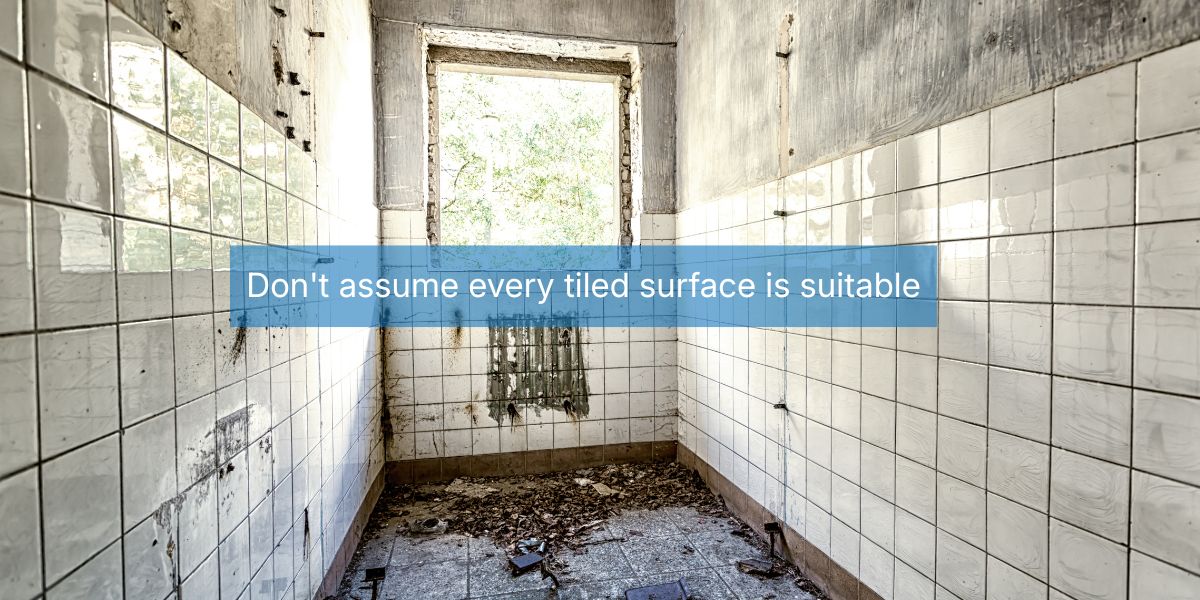
However, don't assume that every tiled surface is suitable. Loose or damaged tiles, uneven surfaces, moisture issues and other problems may need to be addressed before installation.
If you're unsure, it's always better to ask before ordering.
The most important thing, regardless of the substrate, is that you prepare it properly:
-
All surfaces must be smooth, sound, dry and free of contamination.
-
They must be structurally sound and free from contamination, friable materials or laitance.
-
All surfaces must be free from grease.
-
Where necessary, the walls should be cleaned down prior to the Hycom sheet installation.
-
Sometimes a primer is required. Primers vary but standard wall preparation is 10 parts water to 1 part PV.
2. What will the room be used for?
Not all environments put the same demands on wall surfaces.
A school toilet, commercial kitchen, healthcare facility and food production area may all benefit from hygienic wall cladding, but their requirements can be very different.
Think about:
-
Moisture: Will the walls regularly come into contact with water?
-
Hygiene: How important is having a smooth, easy-to-clean surface?
-
Impact: Could the walls be knocked by equipment, trolleys or heavy use?
-
Cleaning: What cleaning regime will the surface need to withstand?
-
Appearance: Does the space need to meet particular design or colour requirements?
-
Compliance: What industry standards do the walls need to adhere to?
The right product isn't necessarily the same for every project.
That's why it's worth considering how the room will actually be used, rather than simply choosing the cheapest or most readily available sheet.
3. How will the joints and edges be finished?
It's easy to focus on the main sheets of wall cladding and forget about everything around them.
But the finishing details are an important part of the installation.
You'll need to consider things like:
-
Internal and external corners
-
Joints between sheets
-
Wall-to-floor junctions
-
Door frames and other openings
-
Pipes and other obstacles
-
Trims and transition points
For some applications, it’s worth opting for welded joints as opposed to a trim finish as this provides a smoother, sealed finish that helps prevent moisture and dirt getting into the joints.
Other projects may require different trim or finishing solutions.
Planning these details before you order means you can make sure you have everything you need when the installation begins, rather than discovering halfway through the job that you're missing an important component.
4. Which adhesive do you need?
This is another easy one to overlook.
Different substrates and cladding systems can require different adhesives, so it's important to make sure the adhesive you're using is compatible with both the wall and the cladding.
You'll also need to consider the conditions during installation.
Temperature matters.
For example, the environment needs to be at the appropriate temperature before, during and after installation to allow the adhesive and materials to perform as intended. You can find out more about this here https://www.hycom.co.uk/industry-leaders/temperature-control-for-hygienic-wall-cladding.html
Using the wrong adhesive – or installing in unsuitable conditions – can create problems that aren't always immediately obvious.
If you're unsure which adhesive is right for your project, speak to someone who understands the products and installation requirements before you order.
5. Who's going to install it?
This might be the most important question of all.
Wall cladding can look relatively simple to install, but achieving a professional, durable finish requires more than simply cutting sheets and sticking them to the wall.
Accurate measuring and cutting, correct adhesive application, preparation, temperature control, joint finishing and welding all have an impact on the finished result.
Poor installation can undermine an otherwise excellent product.
If you're experienced in installing hygienic wall cladding, you may be perfectly happy to undertake the work yourself.
If not, professional installation can be a worthwhile investment, particularly on larger or more complex projects.
Our video guides offer practical tips on product selection and installation best practices - check them out here
Getting it right before you order
The good news is that you don't have to work all of this out on your own.
At Hycom, we supply a wide range of hygienic wall cladding, flooring, adhesives and trims, and we can help you work out what you need for your particular project.
We also offer professional installation, giving you the option of having your walls and floors supplied and installed as part of a complete solution.
So before you click "order", take a few minutes to think about the five questions above.
Not sure about the answer to one of them? Ask Hycom.
It's much easier to get the specification right before your order arrives than to discover you've missed something halfway through the installation.
Planning a project? Get in touch with the Hycom team for advice on the right products and installation for your requirements.


