

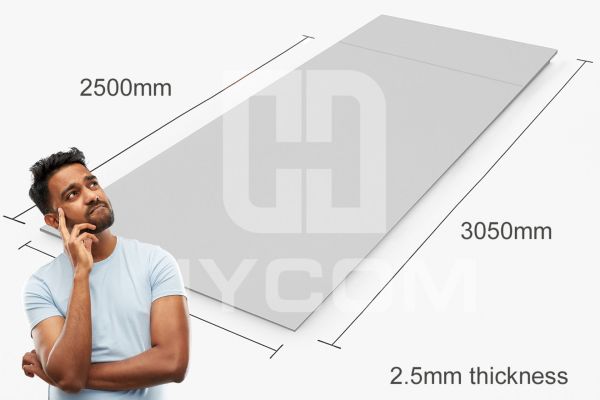
How thick should the hygienic wall cladding sheet be?
When choosing hygienic wall cladding, it's easy to focus on colour, finish and price. But there's another important factor to consider and that’s the thickness of the sheet.
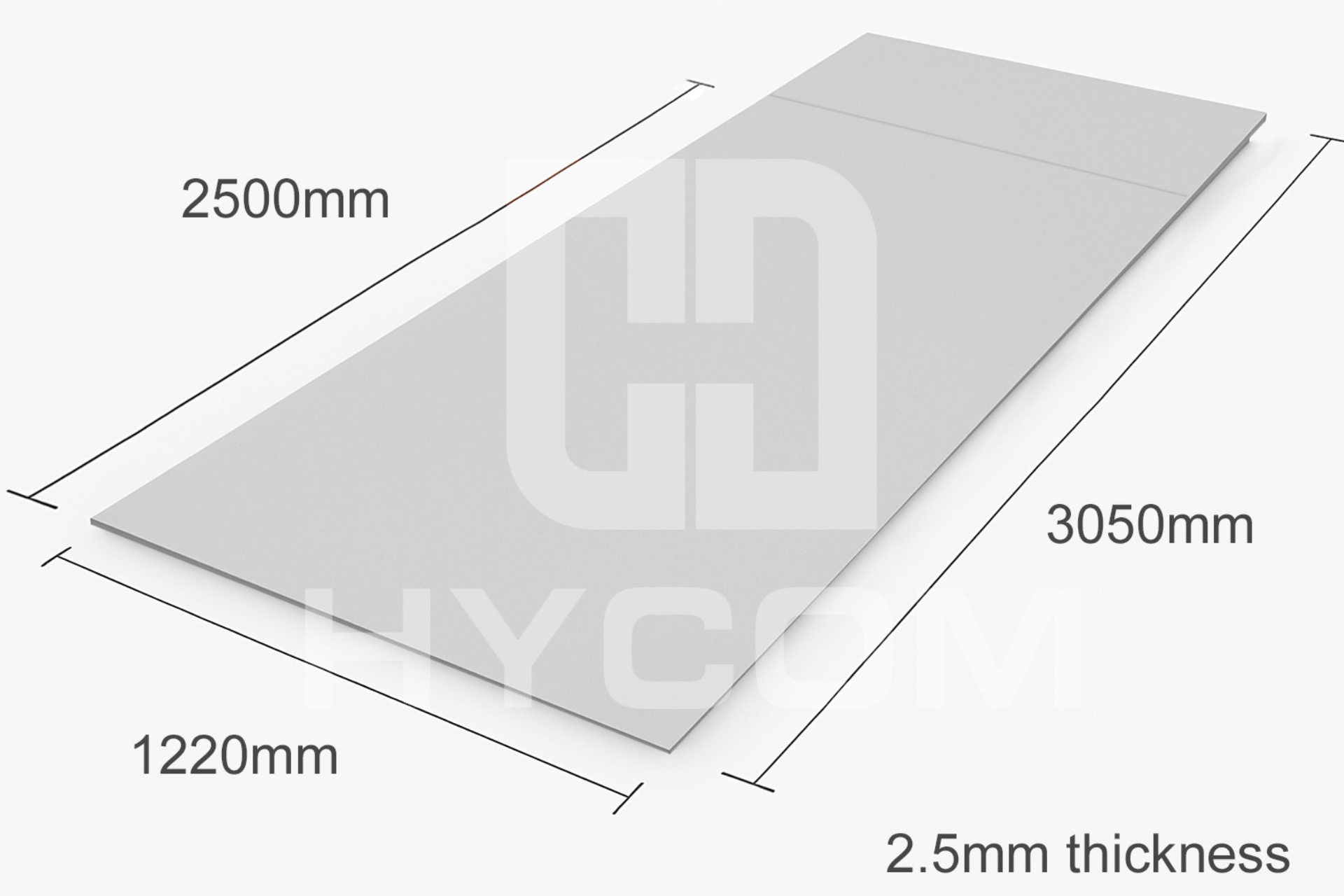
At Hycom, we supply and install both 2mm and 2.5mm PVC wall cladding, with 2.5mm being our most commonly specified option. Although the difference is just 0.5mm, it can influence the sheet's rigidity and may affect its suitability for different environments.
So, which thickness do you need? And why might 2.5mm be the better choice for your project?
1. Understanding the difference between 2mm and 2.5mm
Both thicknesses can provide a smooth, easy-to-clean wall covering, but they won’t necessarily perform the same in different conditions..
A 2mm sheet may be perfectly suitable for applications where the demands on the wall finish are relatively modest and the product meets the required performance criteria, like in domestic bathrooms, or where waterproofing is the main requirement.
A 2.5mm sheet offers 25% more material thickness than a 2mm sheet. This can contribute to greater rigidity, making it an option worth considering for environments where walls face more demanding conditions, like in commercial kitchens and schools.
However, thickness isn't the only measure of quality. The quality of the installation and the condition of the substrate hugely impact the result.
The key is to choose a product that's designed for the environment in which it will be used.
2. Choosing 2.5mm wall cladding for commercial environments
Commercial kitchens, food preparation areas, healthcare facilities and schools all place considerable demands on their wall finishes. Walls may be exposed to frequent cleaning, cleaning chemicals, equipment and everyday knocks.
In these settings, it's important to choose a cladding system with the right performance characteristics.
Greater rigidity
A thicker sheet can offer greater rigidity than a thinner sheet. This can be useful when handling larger panels and to get a neat and professional finish.
Durability for busy spaces
In high-use environments, walls need to cope with everyday wear and potential impacts. A 2.5mm product may be a good choice where impact performance is a priority, provided its technical specifications meet the needs of the application.
It's worth checking product-specific performance information rather than assuming thickness alone determines impact resistance.
Resistance to cleaning chemicals
Commercial environments often require regular cleaning and disinfection. The cladding must therefore be compatible with the cleaning products and methods used.
Ranges such as Altro Whiterock and Hycom WhiteWall are designed for commercial applications where hygienic, easy-to-maintain wall surfaces are important. Always check the manufacturer's technical information to ensure the product is suitable for your particular cleaning regime.
Taken together, these considerations help explain why 2.5mm cladding is a popular choice for demanding commercial projects.
3. When might 2mm wall cladding be suitable?
Not every application needs the same specification.
For many domestic bathrooms, kitchens and utility rooms, the main priorities are providing a water-resistant wall covering and a surface that's easy to clean. A suitable 2mm PVC cladding product may meet these needs without needing a thicker sheet.
However, the right choice depends on the individual product and installation conditions, not simply whether the project is domestic or commercial. Some domestic projects may need a more robust solution, while some commercial applications may be suitable for thinner cladding.
Before deciding, consider the expected wear and tear, the cleaning regime, the condition of the walls and any specific performance requirements.
Our advice? Don't choose on thickness or price alone. Compare the product specifications and make sure the cladding is suitable for its intended use.
4. Does wall cladding thickness affect compliance?
Thickness can also be an important consideration when specifying wall cladding for a commercial project.
There isn't a universal UK legal requirement for all hygienic wall cladding to be 2.5mm thick. Requirements depend on the application, relevant regulations and standards, and the specification for the individual project.
However, if a project specification explicitly requires 2.5mm cladding, choosing a 2mm alternative could mean the product doesn't meet the specified requirements.
Other performance criteria may include:
-
Fire performance: Does the product have the required fire classification for its intended location?
-
Hygiene: Is the surface suitable for the environment and the cleaning regime?
-
Chemical resistance: Can the material withstand the cleaning products used?
-
Impact performance: Is it suitable for the expected level of wear and potential impacts?
-
Installation requirements: Can the product be installed in accordance with the manufacturer's instructions and project specification?
It's important to check the relevant technical documentation before specifying or ordering. A particular thickness doesn't automatically guarantee compliance; the product and complete installation must meet the applicable requirements.
5. Don't overlook wall preparation
Choosing the right thickness is only part way to achieving a quality job. Correct wall preparation is just as important.
At Hycom, we can't stress enough how important it is to prepare the substrate properly before installation. The wall needs to provide a suitable surface for the sheets to bond securely and sit flat against.
An uneven, unstable or contaminated surface can affect adhesion and compromise the quality of the finished installation.
Before fitting wall cladding, make sure the substrate is:
-
Flat and even: Address significant bumps, hollows and uneven areas so the sheets can sit correctly.
-
Clean and free from dust: Dust, grease and loose material can compromise the adhesive bond.
-
Sound and stable: Deal with loose plaster, flaking paint and other unstable surfaces before installation.
-
Dry and suitable for the chosen adhesive: Follow the manufacturer's requirements for substrate moisture and preparation.
It's also essential to use the correct adhesive and follow the manufacturer's installation instructions, including any requirements for temperature, application and curing. You can find more information on that here: https://www.hycom.co.uk/industry-leaders/temperature-control-for-hygienic-wall-cladding.html
Even the right cladding can fail to perform as intended if it's installed over a poorly prepared wall. Taking the time to prepare the substrate properly helps provide the foundation for a professional finish, regardless of the sheet thickness.
6. Is 2.5mm wall cladding worth the investment?
When comparing wall cladding products, the initial purchase price is only one consideration.
Think about the demands of the environment, the performance required and the expected lifespan of the installation. A product that offers the right combination of rigidity, durability and chemical resistance may represent better long-term value for a demanding application, even if the initial cost is higher.
That doesn't mean thicker cladding is always the best choice. A suitable 2mm sheet may be entirely adequate for one project, while 2.5mm may be more appropriate for another.
The important thing is to look beyond the price per sheet. Think about the technical specifications, installation requirements and suitability for the job to help you make an informed decision.
Choose the right wall cladding for your project
So, which thickness of hygienic wall cladding do you need?
For applications where a straightforward, easy-to-clean wall covering meets the requirements, 2mm may be a suitable choice. For more demanding commercial environments, 2.5mm is well worth considering for its additional thickness and potential benefits in rigidity.
Ultimately, the right choice depends on the environment, the product's tested performance and any project-specific requirements.
At Hycom, we supply and install hygienic wall cladding for a wide range of commercial applications, helping customers find a solution that meets their needs.
Not sure which thickness is right for your project? Explore our hygienic wall cladding ranges or contact the Hycom team for advice on choosing the right product.


