
Is hygienic wall cladding impact resistant?
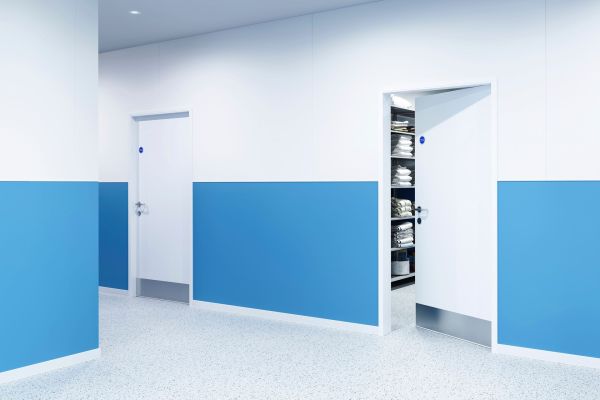
Walls take a fair bit of punishment in busy commercial environments. Think about schools, hospitals, hotels and commercial kitchens, where people, furniture and equipment are constantly on the move. It doesn't take long for unprotected walls to start showing the signs of everyday wear and tear.
That's why durability and impact resistance are worth thinking about when choosing a wall finish, alongside the usual considerations of hygiene and ease of cleaning.
But how well does hygienic wall cladding stand up to knocks and bumps? And is it the right choice for environments where walls take a regular beating?
Let's take a look.
What do we mean by impact protection?
Put simply, impact protection is how well a material can withstand knocks, bumps and physical contact without cracking, breaking or becoming damaged.
There are plenty of examples of where this matters in commercial environments:
-
Healthcare settings: Beds, wheelchairs, medical equipment and trolleys regularly moving through corridors and patient areas.
-
Education: Tables, chairs, school bags and the general hustle and bustle of a busy school.
-
Commercial kitchens: Catering equipment, food trolleys and busy working environments.
-
Food manufacturing: Equipment, stock movement and the demands of a busy production area.
-
Retail and storage: Stock cages, pallet trucks and handling equipment moving around the building.
In these environments, damaged walls aren't just an eyesore. They can mean ongoing maintenance costs, repairs and disruption to the day-to-day running of the building.
How does hygienic wall cladding withstand impact?
Hygienic wall cladding is made from durable PVC, creating a protective surface that's designed to cope with the knocks and bumps of everyday commercial use.
Unlike decorative wall finishes such as paint, quality hygienic wall sheets are designed with durability in mind.
Take Altro Whiterock White, for example. It achieves a 'no breakage' impact resistance rating when tested to ISO 179/1eU. In simple terms, this demonstrates how well the material withstands impact under the conditions of the specified laboratory test.
Its semi-rigid construction also provides a degree of flexibility, helping it cope with everyday contact without the brittleness associated with some traditional wall finishes.
Of course, the wall sheet itself is only part of the picture. The substrate, adhesive, joints and overall installation all play a part in how well the finished system performs. Getting the specification and installation right is just as important as choosing the right product.

Wall cladding versus traditional tiled walls
Ceramic tiles have been a popular choice in commercial environments for years, particularly where hygiene and durability are important.
But they're not without their problems.
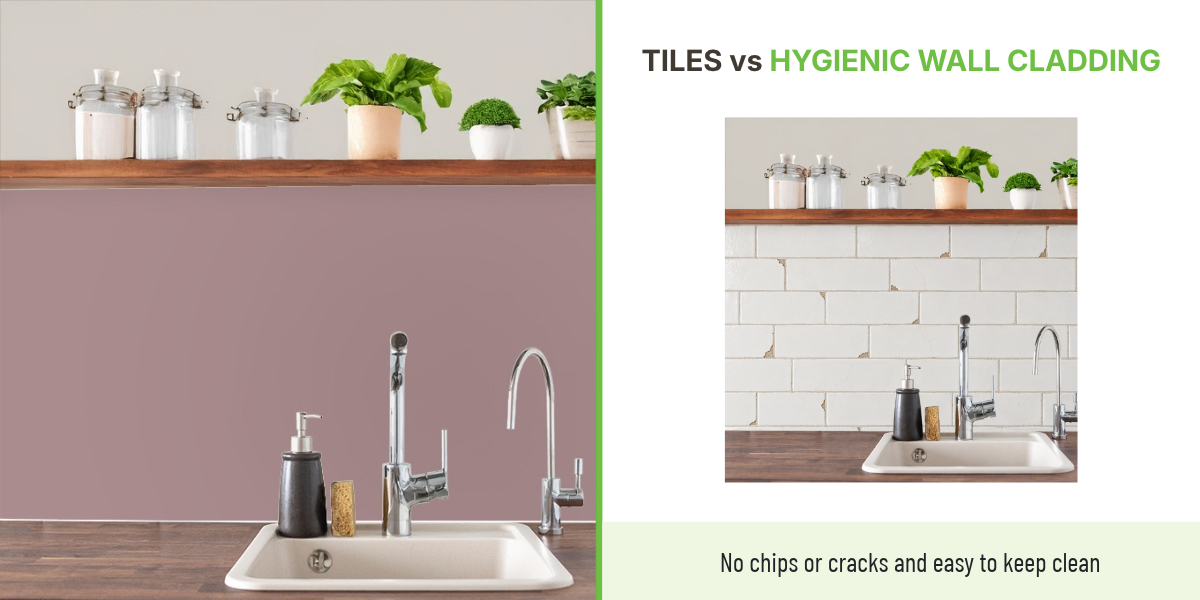
A heavy knock can cause a tile to crack or chip, leaving a damaged surface that needs repairing or replacing. Grout lines can also deteriorate over time, creating additional maintenance and cleaning requirements.
Hygienic wall cladding offers a practical alternative.
Large wall sheets create a smooth, grout-free finish with fewer joints to maintain. They're easy to clean and, thanks to their impact-resistant properties, are well suited to areas where everyday knocks and bumps are part of life.
Of course, no wall finish is completely damage-proof. The best option will depend on how the space is used, the likelihood of impact and the level of protection needed.
Does all wall cladding offer the same level of protection?
Not at all.
Different wall cladding products have different material compositions, thicknesses and performance characteristics. So, it's worth looking beyond colour and appearance when choosing a product and taking a closer look at the technical specifications.
Here are a few things to consider:
Material thickness: The thickness and composition of the sheet can influence how well it performs when subjected to impact.
Impact resistance testing: Look for technical data showing how the product performs under recognised testing standards.
Installation method: The adhesive, substrate and joining system all contribute to the performance of the finished installation. Even the most robust wall sheet won't perform as intended if it's poorly installed.
Vulnerable areas: External corners, doorways and areas where equipment regularly passes are more likely to suffer damage and may need some extra protection.
For example, stainless steel corner protectors can be fitted in particularly vulnerable areas to help guard against knocks and scrapes.
The important thing is to choose a system that suits the demands of your environment, rather than assuming all wall sheets offer the same level of protection.
When you need a higher level of wall protection
In some environments, the occasional knock or scrape is the least of your worries. Busy corridors, healthcare facilities, schools and areas with regular wheeled traffic can put walls under considerable pressure.
If that's the case, it may be worth looking beyond standard hygienic wall cladding and considering products specifically designed for more demanding environments.
Here are three options to consider.
1. Altro Fortis Titanium – durable wall protection
Altro Fortis Titanium is designed for areas where walls are exposed to frequent knocks, bumps and scuffs.
Its dense, semi-rigid PVC construction provides a durable protective surface, while its lightly textured finish helps disguise everyday marks and abrasions.
The colour runs throughout the sheet, helping to reduce the visibility of scratches and scrapes. It also comes with its own colour-matched corner protection, giving you a coordinated finish and additional protection in vulnerable areas.
It's a great option for busy corridors, healthcare environments, schools and public areas where walls need to stand up to regular activity.
2. Gradus – dedicated wall protection systems
Gradus offers a wide range of wall protection products, including protective wall cladding, wall guards, corner protection and heavy-duty rubber profiles.
Its wall guards are particularly useful in areas where beds, trolleys and mobile equipment regularly move around. They can be fitted at the height where protection is needed most, helping to prevent damage before it happens.
With a choice of profiles, materials and finishes, Gradus makes it possible to build a wall protection system around the specific needs of your environment.
3. Acrovyn – robust protection for busy environments
Acrovyn offers a range of specialist wall protection products designed to protect interior surfaces from impact damage.
Its range includes wall protection sheets, corner guards, crash rails and other protective profiles. This means you can provide extra protection in the areas most likely to come into contact with people, furniture and equipment.
It's well worth considering for healthcare, education and other high-traffic environments where keeping walls in good condition can be an ongoing challenge.
Do you need to upgrade your entire wall cladding system?
Not necessarily.
If your environment doesn't need a higher-performance wall protection sheet throughout, there may be a simpler and more cost-effective way to protect the areas most at risk.
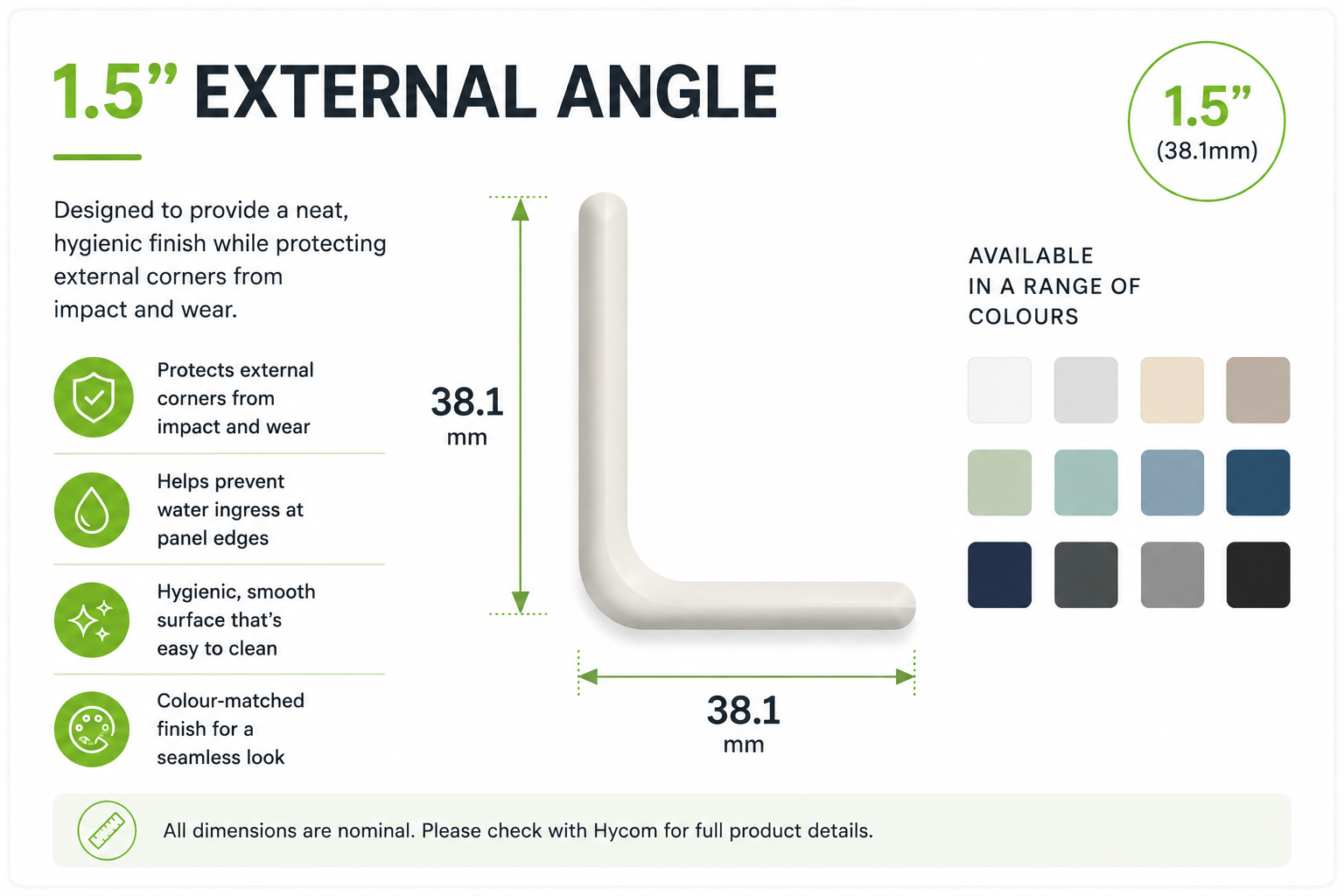
For example, Altro Whiterock Satins offers a durable, impact-resistant hygienic wall finish. But you can also add extra protection to vulnerable corners using colour-matched corner trims from the range.
These aren't designed to offer the same heavy-duty impact protection as a dedicated corner guard. However, they're a useful addition where the wall cladding hasn't been thermoformed around the corners.
As well as giving you a neat, coordinated finish, the trims cover the exposed edges of the wall sheets, helping to prevent water ingress, protect against sharp edges and reduce the risk of corners chipping or lifting.
It's a practical way to get a little extra protection where you need it, without having to upgrade the entire wall cladding system.
The key is to identify where damage is most likely to occur and choose the right level of protection for those areas.
Choosing the right wall protection for your environment
When choosing wall finishes for a busy commercial space, it's worth thinking about more than just how the finished walls will look.
Consider how the space will be used, what equipment will be moving around and which areas are most likely to take a knock. You might need a higher-performance wall sheet throughout, or simply some additional protection around corners and other vulnerable areas.
Hygienic wall cladding offers a lot more than just a clean, easy-to-maintain finish. With the right product and specification, it can provide a durable surface that helps protect your walls from everyday wear and tear too.
For environments where hygiene, appearance and long-term performance all matter, it's certainly worth considering.
Need a hand choosing the right wall protection?
At Hycom, we supply a wide range of hygienic wall cladding and wall protection solutions to suit different environments and applications.
Whether you're looking for a practical wall finish for a commercial kitchen, healthcare facility, school or food production area, we can help you find a solution that works for your space.
Get in touch with the Hycom team to discuss your project.