

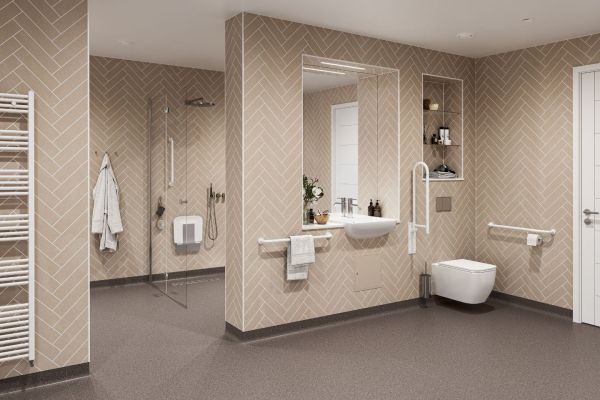
What is LRV and why is it important?
LRV is a measured value (on a scale from 0 to 100) that indicates how much visible light a surface reflects. The higher the number, the more light is reflected.
But LRV isn’t just a technical detail, it’s a key factor in creating spaces that are accessible and safe for everyone.
In fact, UK regulations require a minimum 30-point difference in LRV between certain surfaces to ensure sufficient visual contrast. This helps people with visual impairments navigate spaces more easily and safely.
Where should LRV contrast be applied?
To meet accessibility requirements, and to create spaces that are intuitive to use, this 30-point contrast should be considered across several key areas:
Doors and their surroundings
Doors should clearly stand out from the surrounding wall. Also, ironmongery such as handles and push plates should contrast with the door itself, making them easy to identify and use.
Using wall cladding systems such as Altro Whiterock, who offer a wide variety of coloured wall sheets, can help achieve consistent finishes with clearly defined contrast options.
Handrails and balustrades
Handrails must visually contrast with the wall or background behind them to make sure they are easy to locate and use for support.
Sanitary fittings
In washrooms, elements such as toilet seats and grab rails should contrast with walls and surrounding surfaces. This is essential for usability and compliance in accessible environments.
Products like Altro Whiterock Satins offer a wide palette of soft, contemporary colours designed to create calm spaces, at the same time as making it easier to achieve the required contrast and without compromising on design.
Floor and wall junctions
Clear definition between surfaces is a must. Skirtings and floor finishes should contrast with walls to help users distinguish boundaries and changes in level.
A common design approach is:
Walls and ceilings: high LRV (70–90)
Floors or key features: mid to low LRV (10–40)
This creates a clear, functional visual hierarchy within the space.
Altro’s wall cladding ranges have been carefully designed to offer a wide variety of options that pair with floors and meet the required LRV difference.
Tactile features and signage
Control panels, lift buttons, and tactile signage should also stand out from their background to ensure they are easily identifiable.
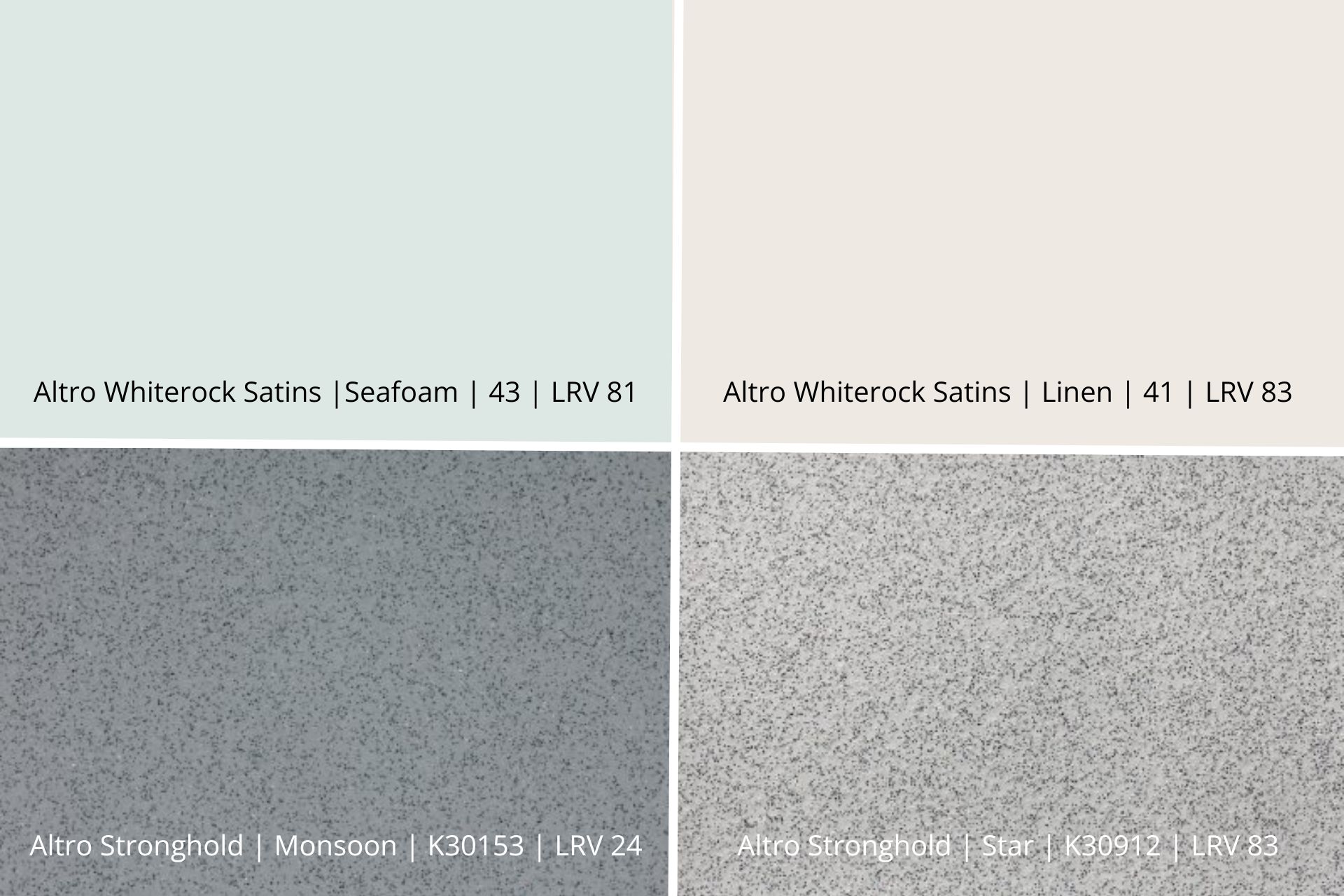
LRV vs colour brightness: what’s the difference?
LRV can often be confused with colour brightness. But they are not the same.
LRV is a measurable, objective value, whereas brightness is subjective and how we perceive a colour. Two colours may appear similar in brightness but have very different LRV values, which is why relying on LRV data is essential for compliance.
Can LRV impact energy efficiency?
Interestingly, yes.
Surfaces with a higher LRV reflect more natural and artificial light, which can reduce the need for additional lighting. Over time, this can contribute to improved energy efficiency and lower running costs, particularly in larger commercial environments.
More than compliance
LRV is often viewed as a regulatory requirement, but it’s much more than that.
It’s a practical design tool used by designers and specifiers not only to ensure compliance but to enhance the usability and feel of a space. When LRV is applied thoughtfully, it can help define areas, guide movement, and even enhance the overall aesthetic.
With versatile systems like Altro wall cladding, achieving both compliance and design intent is easier than ever.
In short, LRV isn’t just about meeting standards, it’s about creating environments that work better for everyone.


